
Find out the best survival knife for your needs with Jason Salyer's field-tested guide. Learn knife selection, maintenance, and real-world applications for any crisis.
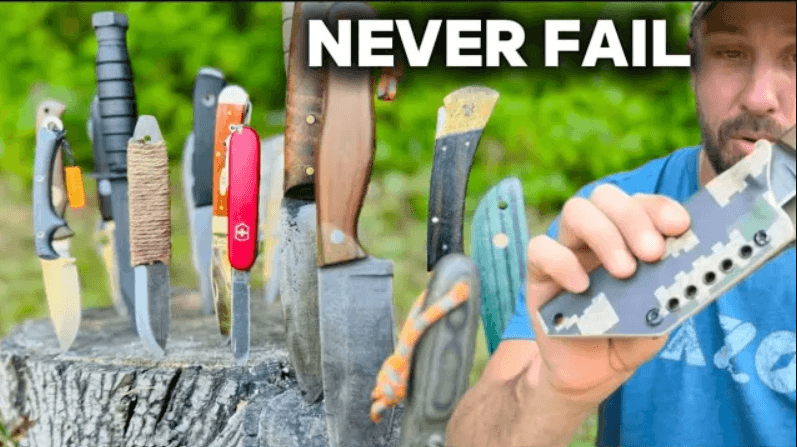
Most people think any knife with "tactical" stamped on the side will save them when things go sideways. They're wrong. I've spent three decades testing knives in conditions that would make most folks tap out, and I've learned that choosing the right survival knife comes down to understanding what you actually need versus what looks cool on Instagram.
So here's the question that matters: when everything falls apart and you're left with nothing but what's on you, will your knife be your greatest asset or your biggest liability?
Alright, here's the reality. According to FEMA's 2023 survey, only 51% of Americans believe they're prepared for emergencies, yet the gap between perception and actual readiness is huge. Here's something that'll make this real: An Illinois driver trapped in his burning pickup truck was rescued by two men, one of whom used a cheap Gerber knife to cut the seatbelt so they could pull the driver to safety. That's real life where a knife meant the difference between walking away and not making it home. The best survival knife is the one that you are willing to carry everyday and will get the job done!
When I competed on History Channel’s Alone: The Beast, they stripped us down to nothing but the clothes on our backs. No pack. No tools. No knife. Just our own ingenuity and whatever the land was willing to give up. Out there in the Louisiana bayou, the land didn’t give much.
There were no sharp stones, no obsidian, nothing you’d even call a cutting edge. The reeds were the closest thing to a “knife,” and trust me that’s a miserable substitute when you’re cold, hungry, and trying to carve out another day of survival. In that moment, I would’ve traded anything for even the cheapest knife. It would’ve changed everything.
Because a survival knife isn’t just a blade. It’s the most versatile tool you’ll ever carry. Real people have used a knife to:
• free themselves from life-threatening entrapments
• build shelter in brutal weather
• process firewood when hypothermia is closing in
• carve tools and create rescue signals
• prepare and process food when they were close to starving in a survival situation
When everything else is gone, that knife becomes the difference between waiting to be rescued… or rescuing yourself. It can be the difference between life and death.
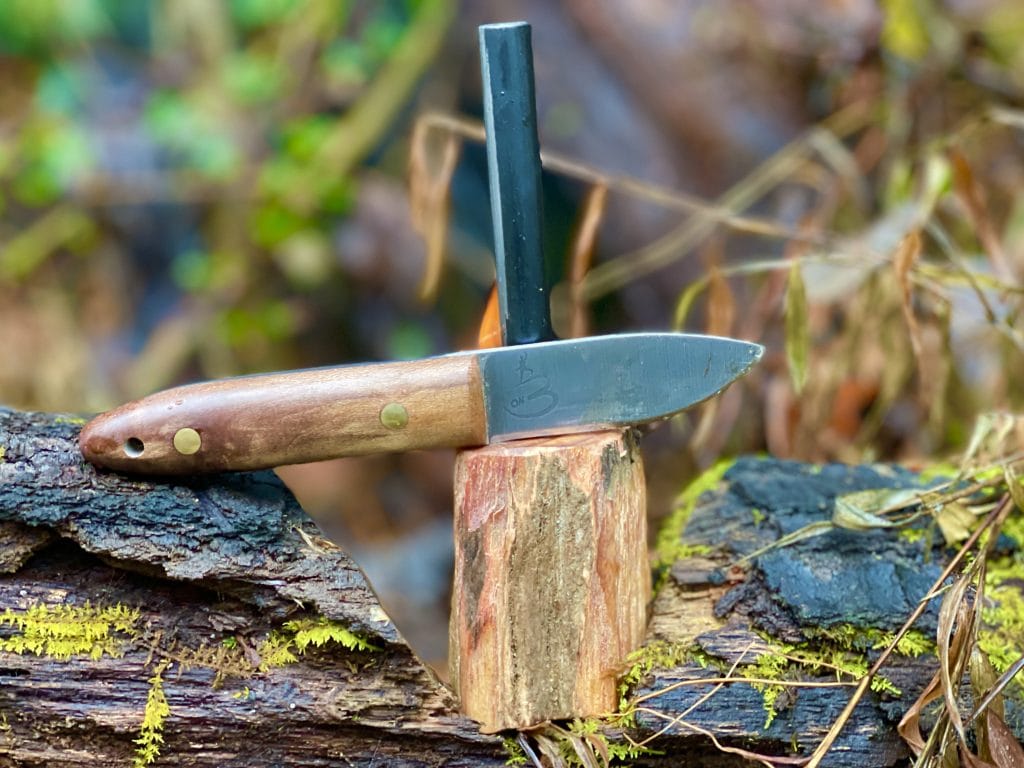
After 30 years of testing knives in every condition imaginable, I've learned what works and what's marketing hype. I designed the On Three EDC knife because I got tired of knives that were either too big to carry comfortably or too weak to do real work. I wanted excellent sheath retention, something small enough for everyday carry without feeling like I'm compensating for anything, and big enough to handle all the jobs a knife needs to do. That's 52100 steel, full tang, and a design based on three decades of actual field use. I also want quality, Made in America knives. It's not a requirement. It's my preference. There are 5 critical factors to know when selecting a knife for your needs.
Here's my On3 EDC if you're interested:
Here's what most preppers get wrong: they buy based on looks, brand hype, or what some influencer with zero field time recommends. Then when they actually need it, they realize their $200 "tactical operator" knife can't handle basic tasks because the edge geometry is wrong, or the handle design is impractical for extended use.
The stakes are real. Your family's safety might depend on your ability to create fire, build shelter, or process food in an emergency. And all of that starts with having the right blade.
Let me walk you through what actually matters when selecting a survival knife. Forget the marketing nonsense. This is what three decades in the field has taught me.
The truth is that a box cutter can handle a large majority of knife jobs and a 10 inch Rambo knife can be a bit cumbersome.
I carry a 2.75-inch fixed blade as my primary. It's small enough to ride comfortably on my belt all day but substantial enough to handle serious work when needed. During a recent camping trip with my family, this length allowed me to prepare kindling, clean a fish, and make tent stakes and strip the insulation from a wire all with the same tool.
This is where people get really confused because both have legitimate advantages. There are way too many different types of steel to list so we will just stick to the basics.
Carbon Steel (My Personal Choice):
Stainless Steel:
I run carbon steel knives most of the time. Yes, you need to maintain them, but honestly, I rarely have to oil my knife unless it's getting wet frequently. For my EDC, I trust high-quality carbon steels. My On Three EDC is made from 52100 steel, which gives me the perfect balance of edge retention, toughness, and ease of sharpening.
Pro tip: If you live in a humid coastal area or store your gear in a damp environment, stainless steel might make more sense. But learn to sharpen it properly because it takes a bit more patience.
A full tang knife means the blade steel runs the entire length of the handle. Partial tang knives can be very durable as well like the Mora Companion but it is harder for me to trust them.
I've seen folders and partial tang knives break under hard use leaving people with a useless handle or pointless blade stub.
When you're shopping, look for visible pins or bolts through the handle. That's your visual confirmation of full tang construction. Some manufacturers try to hide it with fancy handle materials, but don't be fooled. Full tang equals strength, and strength equals survival.
Your handle needs to be:
I prefer Micarta handles. They're indestructible, provide good grip even when wet, and won't crack in extreme temperatures.
Avoid: Hollow handles, finger grooves, smooth wood (too slippery when wet), and anything described as "ergonomic" (usually means it only works in one specific grip).
This gets technical, but it matters. Again, there are too many varieties to list them all so we will just stick to the two most useful grinds.
Scandinavian (Scandi) Grind:
Convex Grind:
For a do-everything survival knife, I lean toward the convex grind. It's bombproof, simple to maintain, and excels at the tasks you'll actually do in a survival situation: feather sticks, shelter building and improvising solutions to problems.
After thirty years in this space, I've seen every mistake in the book. Here are the big ones that cost people time, money, and sometimes safety.
Just because a knife costs $400 and has a Navy SEAL endorsement doesn't mean it's right for your needs. I've seen $30 knife outperform $300 knives in field conditions because the cheaper knife had better edge geometry and heat treatment.
Focus on: steel type, tang construction, handle ergonomics, and edge grind. Ignore: celebrity endorsements, tactical marketing, and blade coatings that add cost without adding function.
The Bear Forest Knives lineup I recommend isn't the most expensive on the market, but they're designed by someone who actually uses them. Specifically the On3 EDC designed by me because I couldn't find the quality and knife design that I wanted.
I cannot stress this enough: do not buy a knife and immediately pack it away for emergencies. Take it out, use it, abuse it, and learn its limitations.
Spend a weekend camping and use only that knife for all your tasks. You'll quickly discover if:
A dull knife is a dangerous knife. It requires more force, slips easier, and fails when you need it most.
Your maintenance routine should include:
I keep a simple sharpening setup in my truck: a coarse diamond stone and a fine diamond stone. Total cost under $60, and it keeps every blade in my collection razor sharp.
Pro tip: Learn to sharpen freehand. Stone sharpeners and guided systems are fine, but in the field, you need to maintain an edge with whatever you have available. That's a rock, a small shapening stone, or even the unglazed bottom of a coffee mug.
My personal EDC includes:
Your knife is only as good as your ability to access it. A quality sheath needs to:
I prefer Kydex sheaths for most applications. They're durable, maintain tension indefinitely, and work in all weather conditions. Leather looks classic but requires maintenance and can mold or rot in humid environments.
Test your sheath by doing jumping jacks, rolling on the ground, and running. If your knife stays secure through all that, you're good. If not, upgrade your sheath before you lose your knife in the woods.
One of my core beliefs is that preparedness is a family responsibility. That means teaching your kids proper knife skills early and safely.
Here's how I introduced knives to my children:
Ages 5 to 7: Basics
Ages 8 to 10: First Folding Knife
Ages 11 to 13: Fixed Blade Introduction
Ages 14+: Full Survival Knife Training
My 13 year old son can now outperform most adults in knife skills. He can baton wood, make feather sticks, and maintain his own blade. That's not just a cool party trick. That's real-world capability that could save his life someday.

Q: What is the best survival knife for beginners?
The best survival knife for beginners is a 3 to 5 inch fixed blade with full tang construction, carbon steel, and a simple Scandi or convex grind. Look for something in the $20 to $100 range from reputable manufacturers. Mora or Bear Forest Knives are my top recommendations for beginners because they are affordable, versatile, and built to last.
Q: How often should I sharpen my survival knife?
Sharpen your survival knife only when needed. If the blade can no longer scrape your thumbnail, it is too dull.
Q: Can I use a survival knife for self-defense?
Of course but only as a last resort.
Q: What's better for survival: a fixed blade or folding knife?
A fixed blade is almost always better for true survival situations because it's stronger, more reliable, and has no moving parts to fail. Folding knives are convenient for EDC but can't handle heavy tasks like batoning. For serious preparedness, carry a fixed blade as your primary and a folder as backup.
Q: How thick should a survival knife blade be?
For serious survival use, look for blade thickness between 1/8 inch and 1/4 inch. Thinner blades (under 1/8) are better for slicing but can fail during heavy use. Thicker blades (over 1/4) are extremely strong but sacrifice cutting performance and are heavy.
Q: Do I need an expensive survival knife or will a cheap one work?
You don't need to spend $500, but don't cheap out with a $10 gas station knife either. The $50 to $150 range offers excellent knives that will serve you for decades. Focus on quality materials and construction rather than brand names.
Q: Should my survival knife have a serrated edge?
For general survival use, skip the serrations. A plain edge is easier to sharpen, more versatile, and performs better for the majority of survival tasks. Serrations are useful for cutting rope or synthetic materials, but they're not essential for wilderness survival and they complicate sharpening. If you want serrations, get a separate tool rather than compromising your primary blade.
Find a Good Knife and Train With Your Knife
Book a weekend camping trip and use only your survival knife for every task. Make feather sticks, baton wood, build a shelter, prepare food. This is how you build real confidence and discover any weaknesses in your setup before you actually need it.
The truth is this: preparedness isn't about collecting gear. It's about having the right tools and the skills to use them when everything else fails. Your survival knife is the cornerstone of that capability.
Winter storms are coming. Power grids are fragile. Supply chains are vulnerable. The question isn't if you'll need survival skills, but when. And when that moment comes, you'll either be prepared or you'll be learning expensive lessons in real time.
Don't wait for the emergency to discover your knife isn't up to the task. Make the investment now, build the skills now, and teach your family now. Because when the lights go out and the stores are empty, that blade on your belt might be the difference between thriving and barely surviving.
What's the one knife skill you wish you'd learned earlier? Drop a comment below and let's talk about it. And if you found this guide helpful, share it with someone who needs to level up their preparedness game.
Jason Salyer is the founder of On Three, a 30-year survival expert, knife designer, and dedicated family man who teaches practical preparedness with a faith-driven approach. Jason has trained in wilderness survival across North America and specializes in field-testing gear in real-world conditions. He designed the Bear Forest Knives On Three EDC after three decades of testing knives that either disappointed in the field or were too impractical for everyday carry. His mission is to cut through the fantasy gear hype and bring common sense, functional preparedness to families who refuse to be caught unprepared. Jason lives by the motto: "What's the worst that can happen? Let's go On Three."
Want More Real World Survival Tips?
Subscribe to my channel ON Three for raw, field tested gear reviews and practical survival insights
Sign up for the On3Ready Substack to get survival and preparedness checklist, no nonsense prepping and survival tips
Join our Patreon community for private how to guides, exclusive gear picks, and more
The prepping world is full of fantasy kits and overpriced junk. Let's bring back common sense and function.
My Recommended Gear
These are the tools I trust and actually carry:
Wazoo Survival Gear ~ EDC Ultralight Weight Gear (Use code GOON32025)
Bear Forest Knives: On Three EDC
Exotac Fire Tools (Use code On3)
More Survival Resources
Substack: Weekly updates and real talk at On3Ready
YouTube: Survival and Prepping Videos Resources at ON Three
Patreon: Community and extras at Patreon
Amazon Storefront: Field-tested gear I actually use at Amazon
Website: Resources and products at GoOn3.com
Fitness Channel: Train for real life with me at Fit On Three
Apparel: Wear your mindset. Shop On Three Merch
What's the worst that can happen? Let's go On Three.