
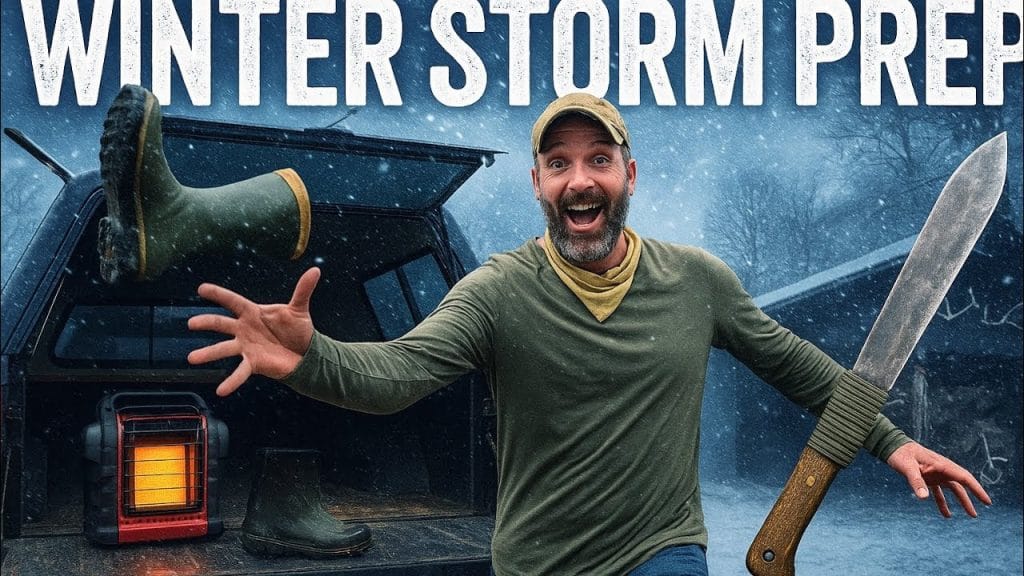
January 28, 2014. Just 2.6 inches of snow fell on Atlanta. Within 20 minutes, every major roadway ground to a complete halt.
Over a million people were trapped on the roads, some for over 12 hours. Children were forced to sleep at schools. Three babies were born on the highways. A man walked six miles through ice to reach his daughter stranded at school. Drivers abandoned thousands of cars and spent the night freezing in vehicles without supplies.
Snowmageddon wasn't just about unprepared roads. It was about unprepared people. Families separated. Parents unable to reach children. Workers trapped without food, water, or warmth. Two people died in Georgia, part of 13 deaths across the Deep South from a storm that would barely register as weather in northern states.
The difference between comfort and catastrophe in winter conditions isn't luck. It's preparation. And it starts with your vehicle.
If you prefer video format, I walk through my entire truck setup and demonstrate everything in this article over on YouTube:Winter Vehicle Preparedness
When roads turn icy and temperatures plummet, mechanical failures and accidents become significantly more dangerous. Being stranded in winter conditions isn't just uncomfortable. It can be deadly. Proper preparation ensures you're self-sufficient when help is hours away or roads are impassable.
During Snowmageddon, the National Guard deployed military Humvees just to deliver food and water to stranded motorists. Emergency services were completely overwhelmed. If you had been trapped in that gridlock without supplies, without heat, without a plan, what would you have done?
Winter's cold temperatures can reduce battery capacity by up to 60%. If your battery is three to six years old, replacement before winter arrives is essential. A dead battery in a frozen parking lot or remote location can create a genuinely dangerous situation, potentially requiring an overnight stay in your vehicle.
Tire condition directly impacts winter survival. Check tread depth regularly. Insufficient tread means reduced traction on ice and snow. Consider adjusting tire pressure based on conditions. While higher pressure improves fuel economy, slightly lower pressure (reducing PSI by 2 or 3 points) can increase traction on slippery surfaces.
I generally run 65 PSI in my tires, but in wintertime slippery conditions when traction is essential, I might consider taking a couple PSI out so I can get more traction.
Don't forget your spare tire. Many drivers discover their spare is flat only when they desperately need it. Check spare tire pressure monthly and ensure you have the tools to change it quickly.
Cold weather affects all vehicle fluids. Check and top off:
Never let your fuel tank drop below one quarter full. Treat quarter tank as empty. This practice prevents fuel line freeze ups, ensures you have emergency range if stranded, and eliminates stress during fuel shortages or winter storms when stations may have long lines or limited supply.
Between my diesel tank and veggie oil system, I can go close to 1,000 miles. You might not have dual fuel systems, but keeping your main tank above quarter full gives you options when you need them most.
Keep multiple light sources with fresh batteries. Emergencies happen at night when visibility is worst. I learned this the hard way when something was carrying off one of my chickens in the middle of the night. I grabbed my weapons light and got nothing but black. Same with the backup. Both batteries completely dead. Everything goes wrong in the dark, so make sure you're prepared.
Essential lighting includes:
That magnetic light has been one of the handiest things I've ever added to my kit. It sticks anywhere on the steel frame and gives you both hands free to work.
Getting unstuck or helping others requires proper tools:
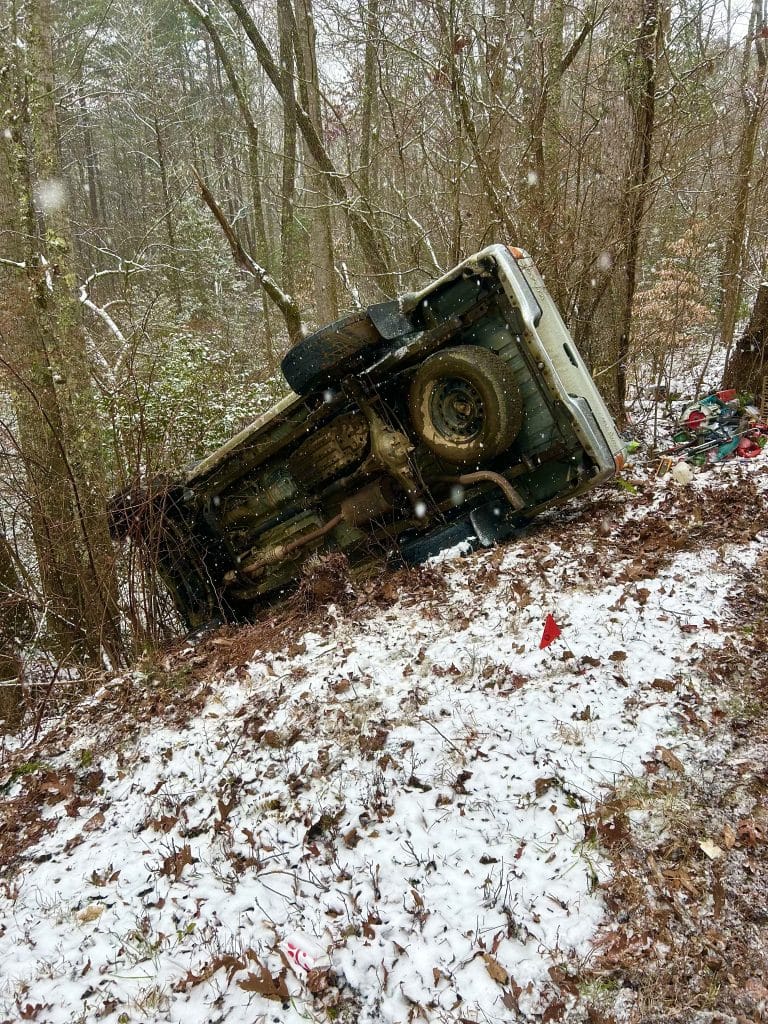
I once helped a friend who slid down an icy hillside backwards and ended up turned sideways. There wasn't a good way to pull him up or down the hill. We used the come along to winch him straight first, then pulled him back up the hill so he could get home. Without that equipment, he would have been stuck there until a tow truck could arrive, assuming one could even reach the location safely.
Basic tools enable roadside repairs:
I also keep a bottle jack because the stock jack on most vehicles is barely adequate. Those ugly zip ties I got on sale have fixed more things than I can count. They're not pretty, but when you need to temporarily secure something at 2am in freezing rain, pretty doesn't matter.
Temperature regulation can save your life:
I keep rubber boots in my truck because when weather gets nasty, I'm often wearing sandals. Yes, I wear sandals in winter. Don't judge me. But having those Lacrosse Alpha Burley Pro boots means I can step out into whatever conditions exist without soaking my feet. I've tried every rubber boot brand out there, and these are the best. They last forever.
I also have my waxed canvas hat that my buddy Daniel gave me, a couple warm hats, extra bandanas, and multiple layers including down puffy jackets and my wool coat from Swan Dry that goes down to knee length. That long wool coat has kept me warm in conditions that would otherwise be miserable.
If you're stuck overnight, proper sleep gear is crucial:
I made a big mistake this year. I left my Anvil Horn 15 degree down sleeping bag compressed in its stuff sack since last winter. That's terrible for down insulation. It loses R value and poofiness when stored compressed. I'm working on fluffing it back up now, maybe throwing it in the dryer to restore the loft. Store your down gear loose or hanging, never compressed long term.
My wife really enjoys the Mr. Buddy heater in the wintertime when it's frosty and cold. I've got a sleeping bag rated to 15 degrees so I'm generally okay, but she gets colder than I do. Having that heater in the back of the truck makes winter camping actually enjoyable instead of just survivable.
I keep my Gore-Tex bivy bag in my larger pack during winter. It's big and bulky and heavy, but it's incredibly durable and awesome in wintertime conditions. For most of the year I use my ultra light SOL bivvy, but winter demands heavier duty gear.
Even short trips can turn into multi hour ordeals:
That five gallon water jug will freeze a little bit in winter, sometimes completely solid during prolonged cold spells. But generally the days warm up above freezing and the nights get chilly, so it thaws enough to be usable. Even if it's partially frozen, you still have access to some water.
I found year old peanut butter in my pack while filming. For science sake, I had to test if it was still good. Little crunchier than normal, but not bad. That said, rotating your food supplies is smarter than my approach.
Medical emergencies don't wait for good weather:
I keep my first aid kit from Refuge Medical right under the dash hanging on a hook. It's really easy to grab and contains everything I need for serious trauma situations. If there's ever going to be a need for a first aid kit, it's most likely going to be in a motor vehicle. I've been trained on everything in this kit and can use it if needed.
Technology fails when you need it most:
I keep actual paper maps behind my seat because when you're in a canyon or remote area and your phone dies or loses signal, those paper maps are your only navigation option. Everything I carry now uses USB C charging, including the flashlights in my pocket. Having universal charging makes life so much simpler.
The extras that make survival comfortable:
That vinyl floor underlayment is surprisingly useful. It's not much insulation, but it's a whole lot better than sitting on wet frozen ground. It weighs almost nothing and if you don't have padding in your pack, it gives some rigidity and protects your back from getting poked.
I've had my Fiskars axe for over 25 years. It's been on countless adventures and always rides in my truck. I made a little PVC sheath for it. It's a fantastic axe and will probably last the rest of my life before I pass it down to my son or daughter one day.
My ON3 machete from Bear Forest Knives is an excellent chopper. I also keep a larger Colombian made Galavan machete. Between those cutting tools and potentially the chainsaw, I can handle pretty much any debris clearing or firewood processing situation.
Watch the full truck walkthrough on YouTube to see exactly how I organize everything: https://www.youtube.com/watch?v=ecsxr5KXjA4
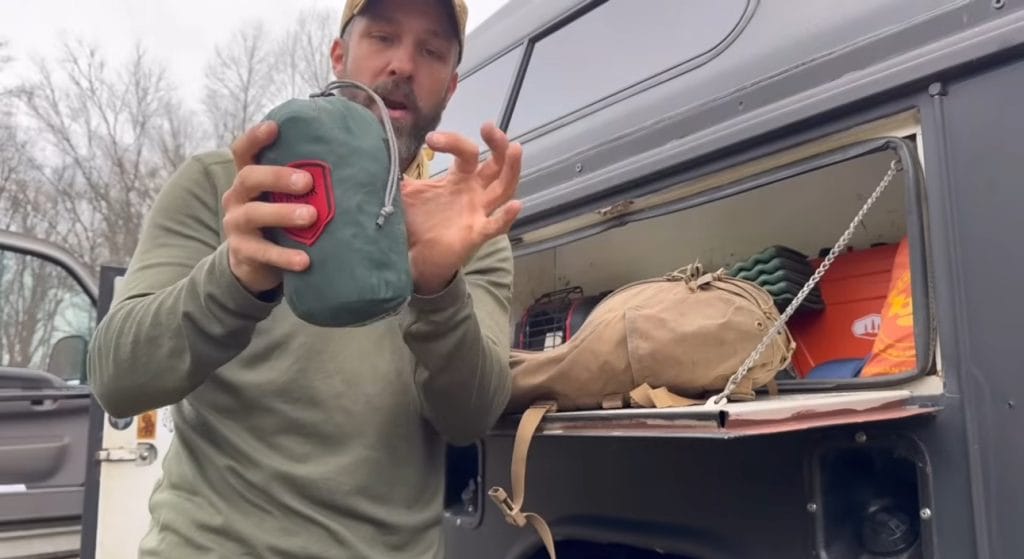
I use a dedicated gear cabinet in my truck bed where I keep most of my everyday camping, hiking, and backpacking gear. It's nice to have some free space instead of having everything jam packed. When you're traveling with family, they can throw all their bags in without everything being crammed full already.
Under the platform storage, I keep tow straps, a big long tow chain, and a come along. That platform is also good for sleeping arrangements. When my kids sleep back there, I've got two platforms that spread out and make a really nice big sleeping surface for them. Then my wife and I sleep underneath.
When packing, avoid rigid stuff sacks when space is limited. Here's why. A stuff sack takes a shape, right? It has a uniform determined shape and size. Now you have to pack around it. What happens is there ends up being wasted space and air gaps between the gear you're packing.
If you don't use a stuff sack and you just jam and cram stuff into the pack, you can shove your sleeping bag into all the little nooks and crannies and save yourself a ton of space. Obviously stuff sacks are fine and convenient and make things easier for storage and organization, but if space is at a premium, lose the stuff sacks.
Use larger packs in winter. I need a bigger bag for wintertime. If you're carrying sleeping bags, extra warming layers, extra calories and stuff, you need a bigger bag than what you typically carry. I normally carry my Tarahumara from Hill People Gear, but it's just a little bit small when weather gets really cold.
My EXO Mountain Gear 4800 pack is what I switch to for winter. It accommodates bulkier cold weather gear, sleeping bags, my Gore-Tex bivy, extra warming layers, and larger shelters if I'm going with family and need to carry extra supplies.
I keep a cinch pack from PNW Bushcraft (I designed this pack and they make them for me) for extra warming layers. It's wax canvas, nearly waterproof, not completely waterproof but pretty close. I keep wool scarves, extra bandanas, gloves, hats, and extra socks in there. If I need something, I pull from it. But for the most part I use it as a pillow at night, which is really nice.
Rotate gear seasonally to prevent deterioration:
This video is kind of about what not to do, guys. Don't leave your pack jammed full of stuff from spring, summer, fall, and into the next winter. That's probably not a good idea. I found old snacks, forgotten gear, and that compressed sleeping bag all because I didn't rotate properly last year.
Water containers will partially or fully freeze during prolonged cold spells, but typically thaw during warmer daytime temperatures. Position water where it won't burst containers if fully frozen.
Some vehicles accommodate winter prep better than others. Truck bed storage, camper shells, or SUV cargo areas provide secure weather resistant gear storage. The back of my truck is fairly watertight but not waterproof. I don't want sleeping bags sitting on the floor where they might get a little bit wet.
I keep at least five sleeping bags stored up off the floor. They've been used pretty much all summer long and all fall long, so they're good and dried out. If we're stuck in some ravine somewhere and who knows where we end up (because that's how we roll), we'll be cozy, warm, and dry. Assuming we survived the crash into the ravine, of course.
Learn from others' failures:
Before winter truly arrives, test your gear:
If traveling with family, multiply basic supplies:
That bucket has seen some use. One of my kids especially gets carsick, and my niece 100% will get carsick. It's not glamorous but it's necessary.
During Snowmageddon, people with prepared vehicles became community heroes. They had the water, blankets, and supplies to help stranded strangers. They had the recovery equipment to pull vehicles from ditches. They had the warmth and shelter to wait out the chaos safely.
The unprepared? They became statistics. They became the people interviewed on national news explaining how they spent 18 hours in their car with no food, watching their gas gauge drop toward empty while running the heater intermittently just to survive.
Which person do you want to be?
Winter vehicle preparedness isn't about paranoia. It's about reasonable preparation for predictable conditions. Icy roads, mechanical failures, and sudden weather changes happen every winter. The goal isn't to predict exactly what will go wrong, but to ensure you're comfortable, safe, and self-sufficient regardless of what happens.
Start with the basics: maintain your vehicle, keep your tank full, and carry essential recovery gear. Build from there based on your climate, typical routes, and family needs. The investment in time and gear pays dividends in peace of mind and actual capability when conditions deteriorate.
I'm not perfect, okay? Judge me if you like. I'm a flawed human being, but I'm working on improving my setup. Maybe that's what this whole thing is about. Getting yourself squared away.
Hit the thumbs up if this helped you. Subscribe if you haven't already. Consider supporting on Substack (links in my profile). Any support for my small business and family is genuinely appreciated. Leave a comment and let me know what your favorite season is. Mine would have to be probably spring. I love spring. Turkey hunting is my favorite thing, and I love when everything turns green and vibrant and pops back to life.
Until next time, what's the worst that could happen?
Add to minimal setup:
Add to mid range setup:
Remember: The best survival gear is the gear you have with you and know how to use. Start with essentials and build your kit over time as budget allows.
For the complete visual walkthrough of my entire truck setup, check out the video on YouTube: Winter Vehicle Preparedness